 JEONBUK NATIONAL UNIVERSITY
Organic Materials & fiber Engineering, Chonbuk National University
Graduate School will introduce.
-
 Advanced Polymeric Materials Lab
- Professor : Nam, Changwoo
- Phone : 063.270 2363
- E-mail : cun120@jbnu.ac.kr
- Laboratory : technical Building 2, room 210
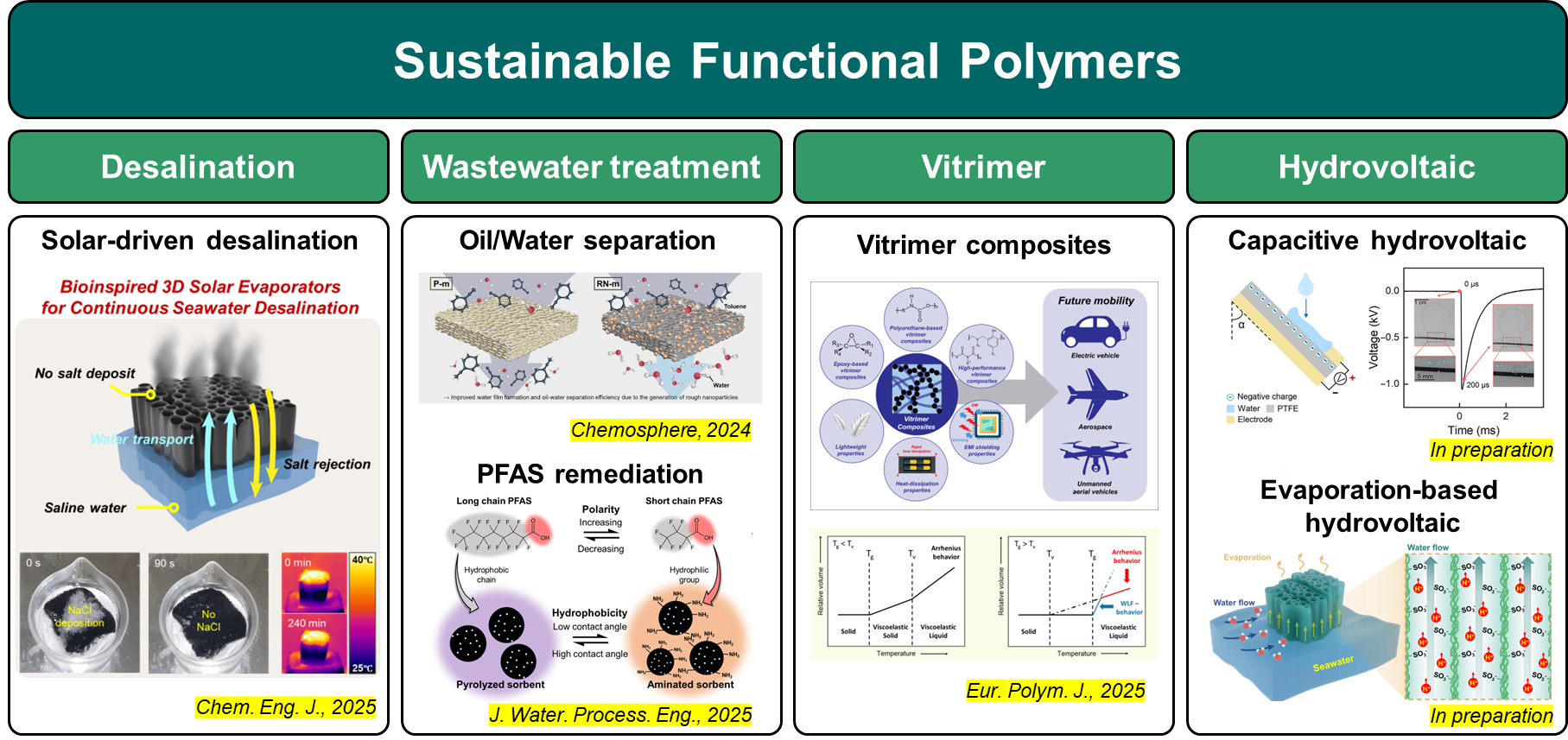
Sustainable Functional Polymers are advanced polymers developed from eco-friendly raw materials and green synthesis strategies, designed to minimize environmental impact through recyclability and reusability after use. Unlike conventional polymers, they not only possess tailored physical and chemical functionalities but also simultaneously meet sustainability criteria such as biodegradability, recyclability, and energy efficiency.
Advanced Polymeric Materials Laboratory conducts research based on sustainable functional polymers. By utilizing bio-based materials, green synthesis strategies, and recyclable polymers, we aim to minimize environmental burdens and establish next-generation material platforms applicable across diverse fields.
Advanced Polymeric Materials Laboratory conducts research based on sustainable functional polymers. By utilizing bio-based materials, green synthesis strategies, and recyclable polymers, we aim to minimize environmental burdens and establish next-generation material platforms applicable across diverse fields.
Research field
Desalination
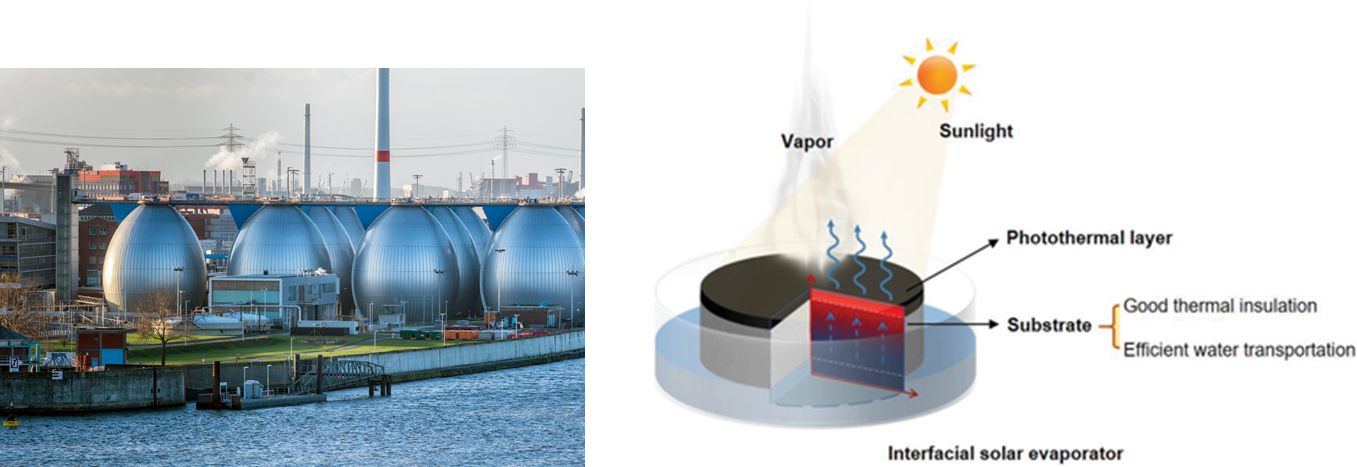
We develop solar-driven desalination materials optimized for light absorption, heat localization, and water transport. Through the integration of nanostructure design and functional polymers, we realize high-efficiency solar evaporators and selective ion-transport membranes, building sustainable platforms for reliable freshwater production.
Wastewater Treatment
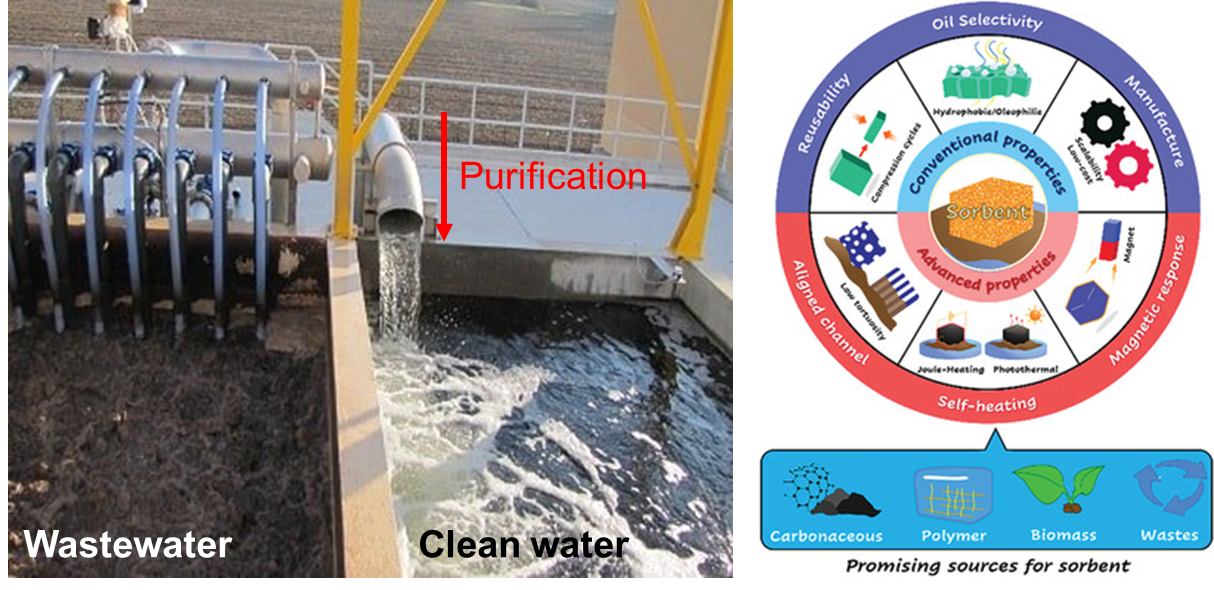
To address industrial and domestic water pollution, our research focuses on polymer-based purification materials. By leveraging adsorption and selective transport mechanisms, we efficiently remove organic pollutants, salts, and persistent contaminants such as PFAS (Per- and Polyfluoroalkyl Substances).
Vitrimers
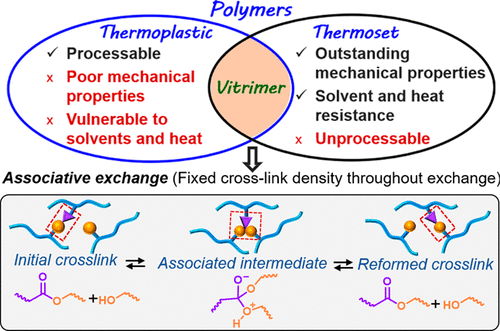
Our lab explores vitrimer-based polymers utilizing dynamic covalent networks (DCNs). Vitrimers maintain thermal stability and mechanical strength while enabling recyclability and reprocessability, making them promising materials for a circular economy. We further enhance durability and sustainability by integrating vitrimers with other functional materials.
Hydrovoltaic
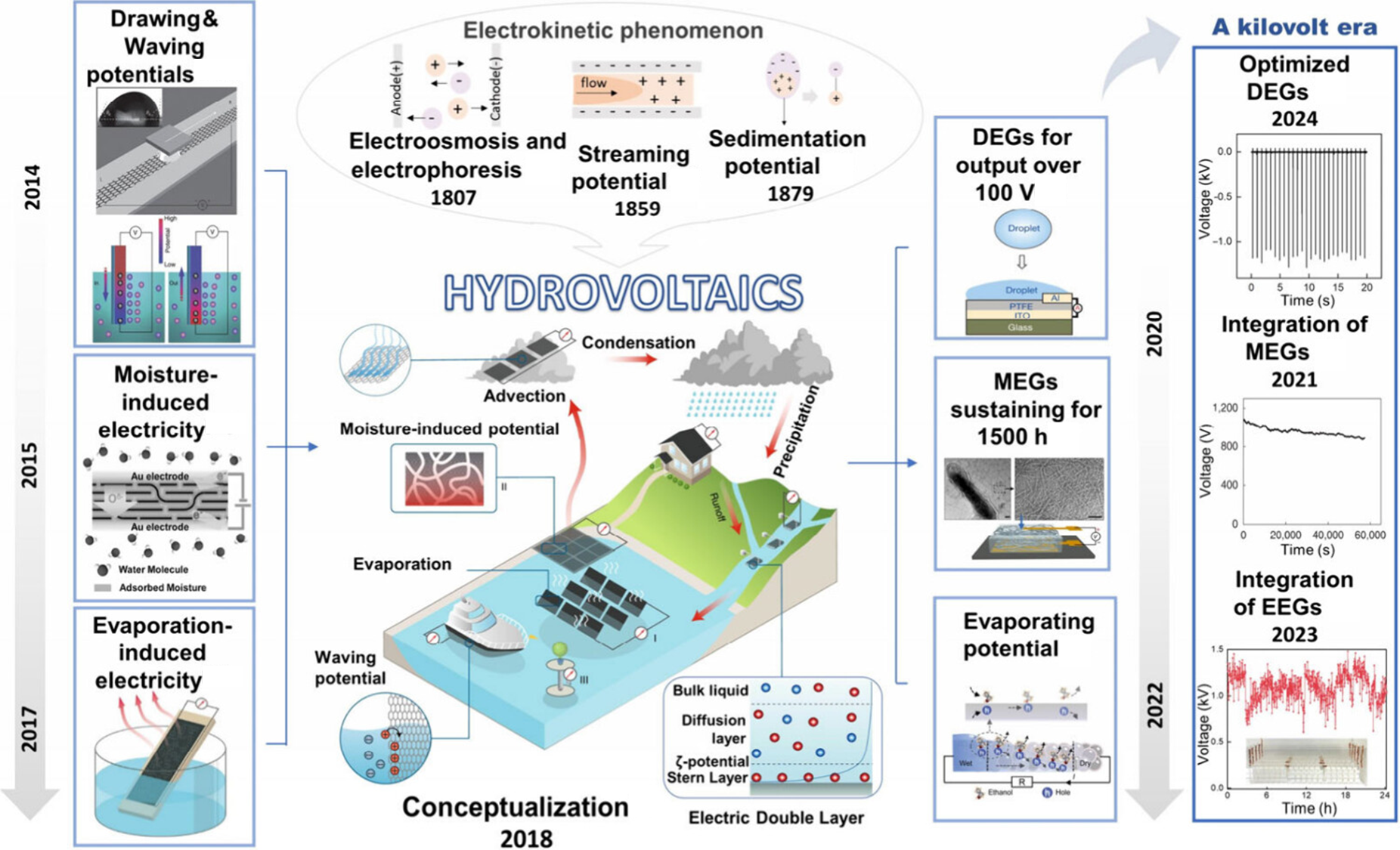
Through surface functionalization and structural design of polymers, we investigate hydrovoltaic technologies that convert interfacial interactions between water and materials into electricity. This approach enables simultaneous water treatment and energy harvesting, establishing hydrovoltaics as a future-oriented research field addressing both energy and environmental challenges.