 JEONBUK NATIONAL UNIVERSITY
A demand-oriented, global-focused, world-class university that fosters specialized fields, develops alongside the region, and is a world-class university.
Beginning with the admission of 60 medical students in March 1971, the university has grown into a regional medical school with 169 professors, 600 students, and 4,425 graduates as of 2017.
Jeonbuk National University, the cradle of higher education in Jeollabuk-do, had long lacked a medical school since its opening in 1971. This led to a severe shortage of medical staff and facilities within the province, failing to meet the medical needs of the residents. This situation developed into a nationwide desire for a medical school at Jeonbuk National University, and public opinion for its establishment intensified in the 1960s.
In this atmosphere, the then Minister of Education Lee Seon-geun announced on July 28, 1954, that the province would consider establishing a medical school. This announcement was a full 16 years before the approval for the establishment of Jeonbuk Medical School. During this 16-year period, the government, Jeonbuk Province, and the Jeonbuk Medical School Promotion Committee were in conflict, and the project progressed and retreated due to national political changes and the state of the academy. Amidst this, the Promotion Committee also expressed its strong commitment to establishing a medical school in Jeonbuk, stating that if the national treasury could not shoulder the burden, it would be funded by donations from the province's residents.
In February 1968, the newly appointed governor of North Jeolla Province actively consulted with the Ministry of Health and Social Affairs and the Ministry of Education. The newly formed promotion committee secured medical staff and reached compromises with the government on procedural issues. However, the Ministry of Health and Social Affairs' position at the time was that the provincial medical center, built with domestic and foreign loans, could be used until the establishment of a medical school hospital, and that the Ministry of Education should recognize this as meeting the "establishment first, approval later" standard.
At that time, there was a serious controversy in the province as to whether it was right to transfer the provincial medical center established by Jeollabuk-do, a medically vulnerable area, to a medical school for the low-income residents, but in the end, thanks to the active support of the people of Jeollabuk-do and the government's decision, the establishment of Jeonbuk National University College of Medicine was approved on December 31, 1970, and 60 new medical students were recruited in 1971, fulfilling the long-held wish and aspiration of the people of the province.
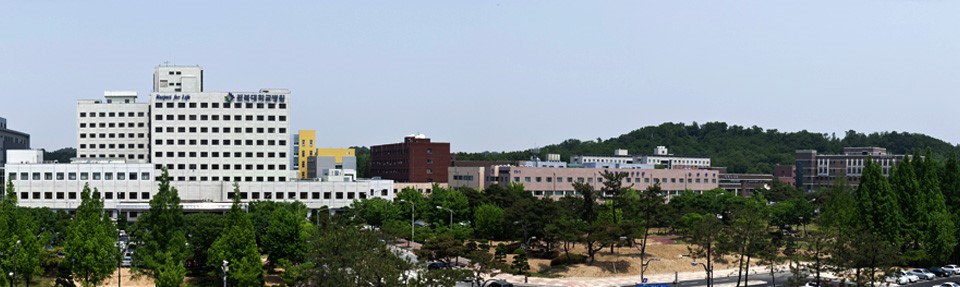
Jeonbuk National University College of Medicine began with the admission of 60 pre-med students in March 1971. As of 2017, it has become a leading medical school in the region, with 169 faculty members, 600 students, and approximately 4,425 graduates. In 1977, the Institute of Medical Sciences was established and accredited as a statutory research institute, fostering research activity. This was followed by the establishment of the Cardiovascular Research Institute, the Voice Science Research Institute, and the Clinical Medicine Research Institute. In 2002, the Basic Medical Research Center (MRC), a research institute designated by the Ministry of Science and Technology, was established at the university to provide more active support in the field of allergy and immunology. Meanwhile, the school has been actively conducting research, ranking among the top medical schools nationwide in research performance (9th in international paper publications in 1988-1999, 2nd among national universities; Han Man-cheong; J Korean Med Sci 2000; 15:3-12) thanks to the active research activities of professors. In addition, the school has been gradually introducing new medical education systems, such as integrated lectures (Block Lecture), Problem Based Learning (PBL), sub-intern system, and establishment of medical education labs for student education.
Jeonbuk National University Hospital faced initial challenges, such as having to lease the Jeollabuk-do Provincial Hospital. Today, the hospital boasts a main building with approximately 1,000 beds, a cancer center, and an emergency center, spread across approximately 40,000 pyeong (approximately 13.5 acres) at the foot of historic Geonjisan Mountain in Jeonju. With approximately 1,900 staff members, the hospital cares for approximately 3,300 outpatients and 1,000 inpatients daily. Furthermore, it has established a geriatric health care center, a children's hospital, a respiratory disease center, a specialized research center, and a nationally designated isolation ward, solidifying its position as a regional public medical institution and driving its growth. Furthermore, the hospital has opened a cancer center to provide specialized medical services to cancer patients in the province. It is also working to improve its clinical environment through outpatient relocation and remodeling, and is preparing for the Saemangeum era.
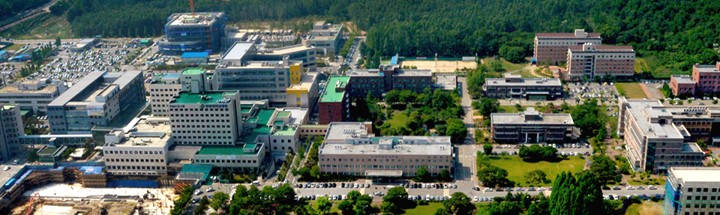
Since its founding, Jeonbuk National University College of Medicine has not only achieved outward and qualitative growth, but also strived for medical education based on Jeonbuk National University's vision of "a university that is centered on its users and develops alongside the region." This vision is based on the university's commitment to nurturing medical professionals who meet the needs of the local, national, and international communities, fulfilling its primary mission of treating disease and promoting health for humanity. Furthermore, professors voluntarily formed the Green Club, a group dedicated to improving the university's environment. Membership fees have contributed to the systematic and professional landscaping of the surrounding area, creating pleasant and spacious rest areas for students and faculty. This well-maintained and clean environment contributes to fostering a positive learning environment for our medical students and fostering character. Furthermore, to proactively respond to the changing medical landscape and demands and to ensure progressive medical education, the College of Medicine transitioned to a Graduate School of Medicine in 2006.
However, contrary to the expectations of students from various majors at the time of conversion to a medical school, such as those who were expected to integrate medicine and foster basic medicine, there were cases of students avoiding certain departments, cases of students giving up on residency training, and cases of all admitted students choosing clinical training. Therefore, in order to select excellent talent and train medical scientists who are not biased towards clinical training, it was converted to a medical school in 2017.