JEONBUK NATIONAL UNIVERSITY
Department Overview
Medicine is an applied science discipline grounded in pure natural science, but it also requires knowledge of the humanities and social sciences, along with life science knowledge and skills. The Pre-Medical School provides character education through a variety of courses, equipping students with the fundamental skills necessary for medical study.
Furthermore, the educational goal is to cultivate ethical awareness as a medical professional, foster social responsibility, and cultivate practical skills that enable them to proactively adapt to rapidly evolving medical technologies.
Furthermore, the educational goal is to cultivate ethical awareness as a medical professional, foster social responsibility, and cultivate practical skills that enable them to proactively adapt to rapidly evolving medical technologies.
Curriculum
The Pre-Medical School curriculum consists of liberal arts and specialized courses.
- Liberal arts courses are designed to equip students with the fundamental knowledge necessary for a career in medicine or the healthcare industry, while fostering the character necessary for academia. Students will learn basic liberal arts (basics of science and engineering, common foundations), core liberal arts (foundations of humanistic thinking, foundations of social understanding, foundations of scientific thinking), and general liberal arts (language, society, culture, history, philosophy, art, physical education, etc.). Due to the unique nature of medical school education, liberal arts courses focus on subjects related to medical majors, such as physics, chemistry, and biology. This allows students to acquire the academic foundation necessary for their majors.
- Major courses serve as a preparatory step for medical school programs. They include subjects related to the natural sciences, such as medical physics, medicinal organic chemistry, molecular and cellular biology, medical genetics, and medical statistics. They also cover basic medical knowledge and humanities, such as introduction to medicine, self-understanding and development, the history of medicine, medical humanities, healthcare leadership, basic medical interviewing, and medical informatics. Additionally, the revised pre-medical curriculum will provide students with a more in-depth understanding of the fundamentals of anatomy and physiology, including Introduction to Human Function, Macroscopic Structure and Practice, and Human Image Structure, enabling them to complete a more in-depth medical education. Thus, in the pre-medical program, students will acquire the fundamental scientific theories that underpin medicine and learn about the human body, mind, and human behavior, enabling them to apply these theories to their basic medical studies.
Major Curriculum
Curriculum
Directions to the Department Office
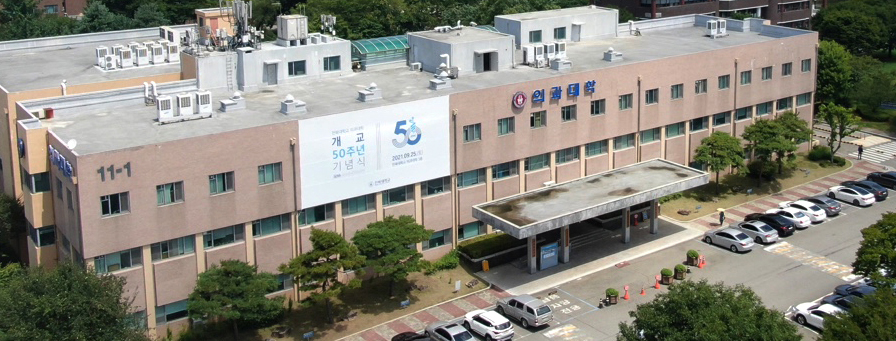
112-1, 1st Floor, Jeonbuk National University College of Medicine, Building 1 (Building 11-1), 20 Geonji-ro, Deokjin-gu, Jeonju-si, Jeollabuk-do (Zip Code: 54907)
fnctId=map,fnctNo=405
Department Office Contact
Tel: 063-219-5290 / Email: premedic@jbnu.ac.kr